

- How to recognise St. John's wort
- When we harvest it and why around Midsummer
- The actives and what they do
- Benefits for very dry and rough skin
- The sun rule
- How we turn it into a hydrolat
- Our products with St. John's wort
- How to use it in the evening
- Benefits and precautions: who should take care
- Frequently asked questions
How to recognise St. John's wort

St. John's wort is a perennial herbaceous plant, thirty to ninety centimetres tall, with two-edged stems and small opposite leaves. The flowers are bright yellow, with five petals and very long stamens that give them a tousled look.
There are two signs by which it is recognised with certainty. The first is hidden in the name: hold a leaf up to the light and you will see a multitude of tiny translucent dots, as if the leaf were perforated. They are not holes but glands with essential oil, and that is where the Latin perforatum comes from.
The second sign is even more striking. Rub a yellow flower between your fingers and they will turn dark red to violet. This juice gives the plant one of its folk names and is the reason the traditional St. John's wort oil infusion is deep red.
When we harvest St. John's wort and why around Midsummer

St. John's wort grows freely in dry meadows, along field margins and in sparse woods.
The time of harvest coincides with the most enduring Bulgarian tradition around this herb: around Midsummer Day, Enyovden, at the end of June, when the plant is in full bloom. The folk calendar and agronomy coincide here, because that is exactly when the active content of the flowers is highest.

The actives in St. John's wort and what they do

The two names that define the herb are hypericin and hyperforin. Hypericin is the red pigment that stains the fingers and is held in the dark dots along the edge of the petals. It is also the compound associated with photosensitivity.
Beside them stand flavonoids such as quercetin, rutin and hyperoside, as well as tannins. It is the flavonoid part that explains why St. John's wort is used in care for dry, reactive skin.
The benefits of St. John's wort for very dry and rough skin


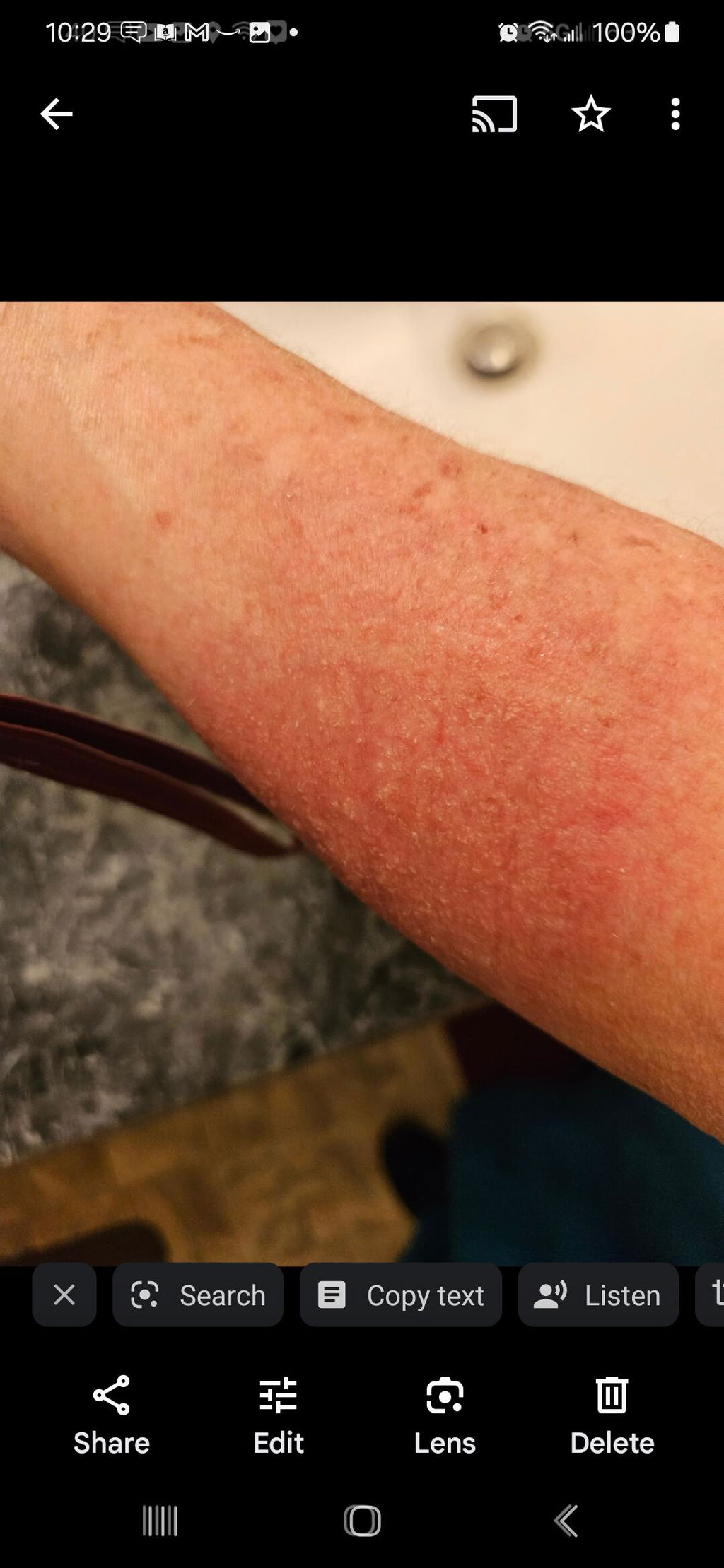
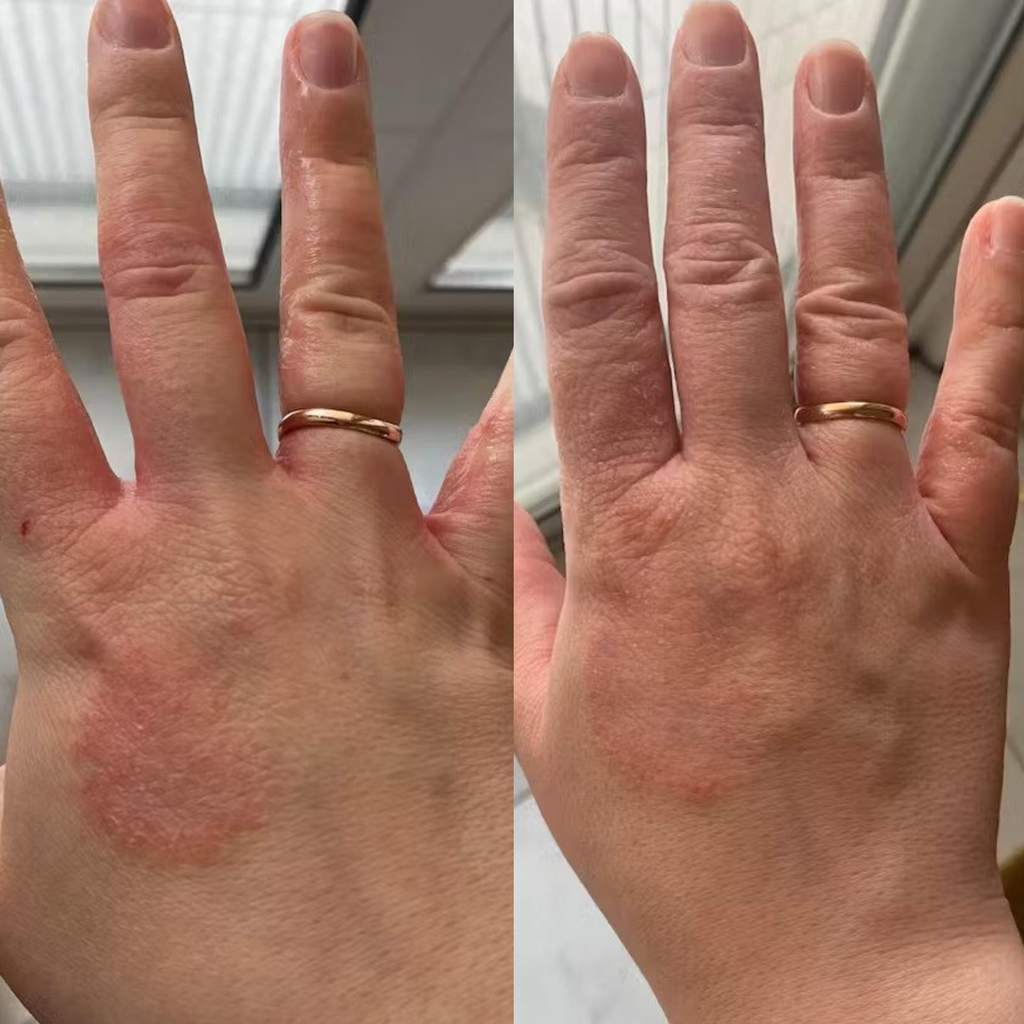
The benefits of St. John's wort for the skin are sought where an ordinary moisturiser does not reach: on very dry skin that flakes, feels tight and hardens on the elbows, knees and shins.
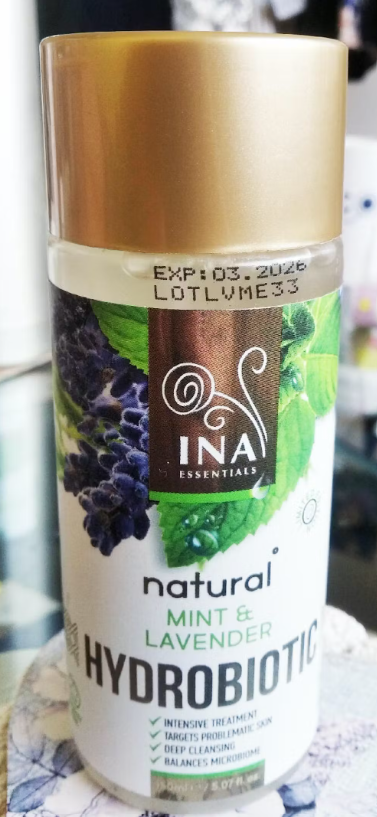
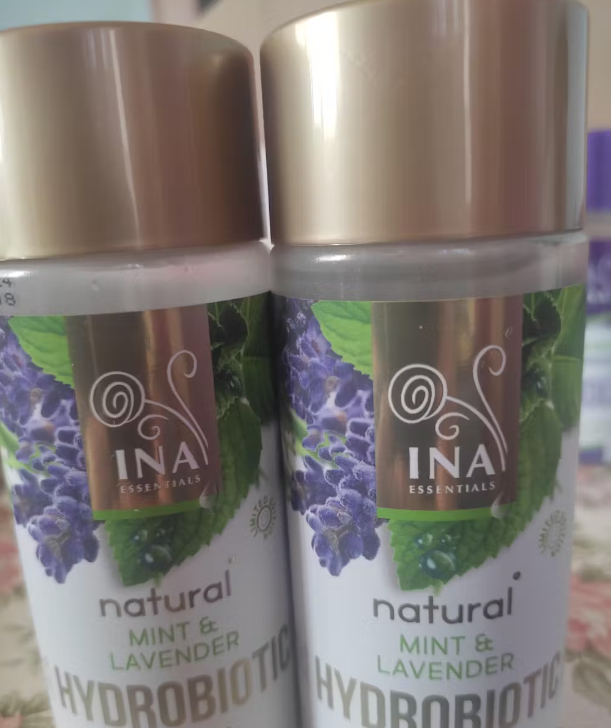
The hydrolat is applied neat with a cotton pad, and in a soothing cream St. John's wort works together with chamomile and propolis. The combination is no accident: chamomile soothes, propolis nourishes, and St. John's wort adds its flavonoid part.
The sun rule
This is the only serious warning in our whole herbal range and it deserves a section of its own.
St. John's wort is photosensitising. Do not apply it to skin that will be exposed to strong sun in the following hours. Its place is in evening care or as after-sun care, when the day outside is already over.
How we turn St. John's wort into a hydrolat

The steam passes through the flowering mass, carries off the volatile compounds and cools back into a liquid. The water fraction is the hydrolat, not an oil infusion and not a decoction.
Note that the hydrolat is clear, not red. The red colour is characteristic of the oil infusion, where hypericin dissolves in fat. It hardly passes into the water fraction at all.
Our products with St. John's wort

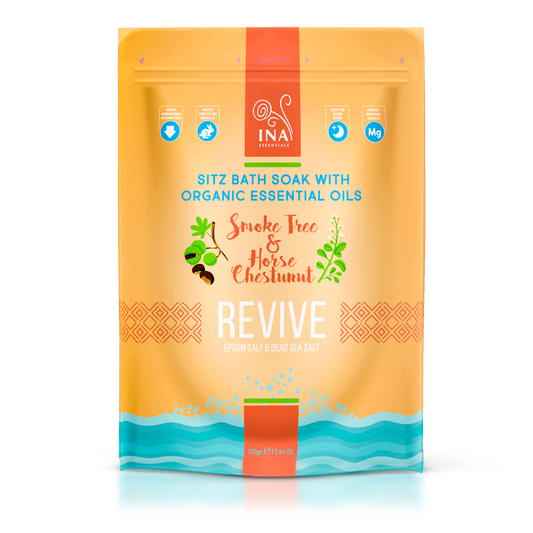
St. John's wort goes into two stand-alone products and one long-term routine for dry skin.
See the whole range
Over 60 products from 11 plants, grown and distilled by us. Creams, shampoos, soaps, salts, essential oils and hydrolats.
See all productsCreamsHow to use St. John's wort in the evening
Benefits and precautions: who should take care
With St. John's wort the benefits and precautions are no abstract topic. Here is what matters.
Herbal cosmetics are care, not treatment. With psoriasis, eczema or another diagnosed skin condition they can run alongside what a dermatologist has prescribed, but they do not replace it.
Frequently asked questions


InaEssentials is a Bulgarian family brand for natural and organic cosmetics. The family has over 25 years of experience in growing essential-oil crops on its own fields, and its products combine centuries-old tradition with the modern and the innovative. A closed production cycle is used - the family controls the whole process, from planting to production and bottling, to ensure the highest quality.
You can find more about the family's journey and the farm on the About us page.
Important information and sources
- European Medicines Agency, Committee on Herbal Medicinal Products, monograph on Hypericum perforatum.
- Regulation (EC) No 1223/2009 of the European Parliament on cosmetic products.
- Regulation (EU) 2018/848 on organic production and labelling of organic products.
- Ingredients and prices are as shown on the InaEssentials product pages as of September 2026.
This article was prepared with the help of artificial intelligence and reviewed by the InaEssentials team.
The information in this article is educational and does not constitute medical advice. InaEssentials products are cosmetics, not medicines, and are not intended to diagnose, treat or prevent any disease. The text refers to external cosmetic use. For a skin or any other health complaint, and when taking medication, consult a doctor. During pregnancy, breastfeeding and for children, consult a specialist before introducing a new cosmetic product.