

- Which mint we use and why it has no seed
- How we grow and harvest it
- The actives and what they do
- Benefits for oily and combination skin
- Peppermint as aftershave care
- How we turn it into a hydrolat
- Our products with peppermint
- How to use it every day
- Benefits and precautions: who should take care
- Frequently asked questions
Which mint we use and why it has no seed

The mint genus has dozens of species and even more hybrids, which explains why two plants with the same everyday name can smell completely different. We use Mentha piperita, peppermint, and that is an important clarification.
Peppermint is a hybrid between water mint (Mentha aquatica) and spearmint (Mentha spicata). Its hybrid origin has one curious consequence: the plant is practically sterile and produces no viable seed. It propagates only vegetatively, through runners and rhizomes.
In practice this means that every peppermint field descends from cuttings, not from sown seed, and that varietal purity is preserved for years. It is recognised by its square, reddish stems and its dark green, lance-shaped, serrated leaves.
How we grow and harvest peppermint

Peppermint is demanding about moisture and generous to whoever provides it. It spreads through underground runners and within a few seasons takes over the whole bed, which means the field has to be kept within bounds.
We harvest before and at the start of flowering, when the essential oil content of the leaves is highest. Scything is done early in the morning, and the fresh mass goes into the still the same day.
The actives in peppermint and what they do

The first name is obvious: menthol. It is the reason for the cold sensation on the skin, and the mechanism is surprisingly specific. Menthol binds to a receptor in the skin that is normally triggered by low temperature. The skin does not actually cool down; it receives the signal that it is cold.
The second compound is menthone, which carries the sharper, slightly grassy note. The third is rosmarinic acid, a polyphenol found throughout the mint family and among the most studied plant antioxidants.
The benefits of peppermint for oily and combination skin


The benefits of peppermint for the skin show most clearly on skin that shines by midday and has visible pores in the T-zone. The hydrolat mattifies, leaves a feeling of firmness and cools, and all that without the alcohol most mattifying toners use to achieve the same effect.
The difference is essential. Alcohol gives momentary dryness, to which the skin responds with even more sebum. The balancing approach works more slowly, but it does not enter that cycle.
Peppermint as aftershave care
Our customers discovered this use before we wrote it down. Peppermint hydrolat is used as a natural alternative to aftershave: it is applied to the skin right after shaving and does not sting, because there is no alcohol in it.
How we turn peppermint into a hydrolat

The process is the same as with our other herbs. The steam passes through the freshly scythed mass, carries off the volatile compounds and cools back into a liquid. The water fraction is the hydrolat: one ingredient on the label and nothing else.
Our products with peppermint
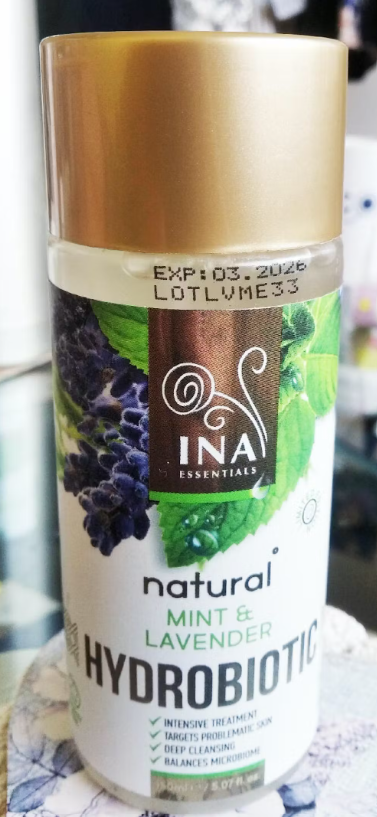
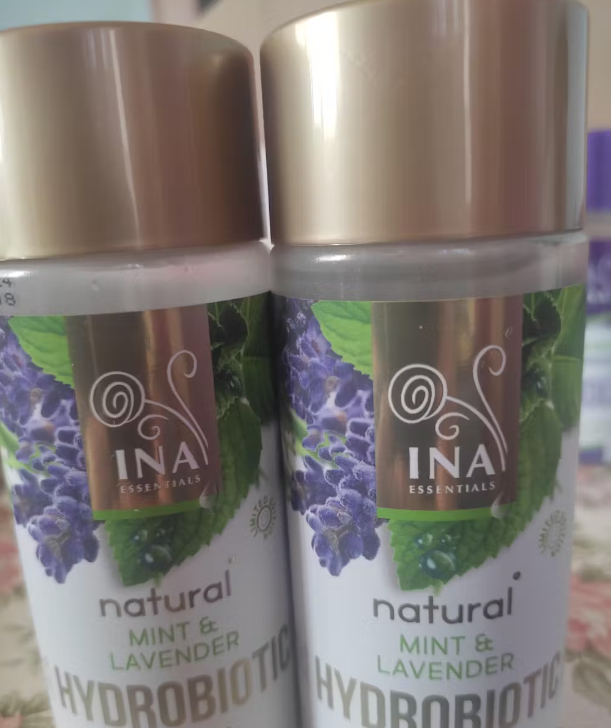
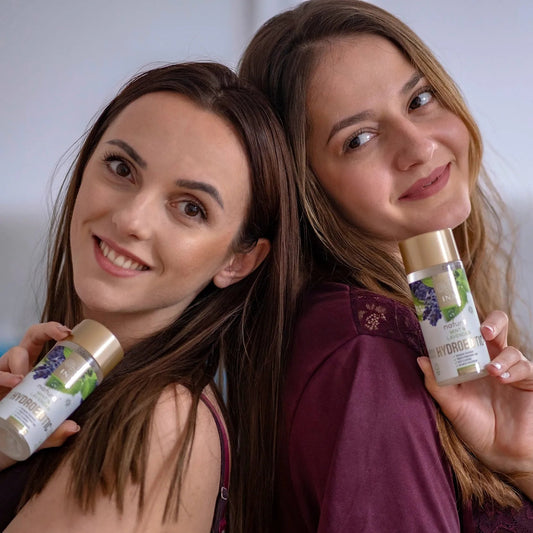
Peppermint goes into two stand-alone products and two long-term routines. In Hydrobiotic Lavender & Mint the two hydrolats are combined with a postbiotic complex from fermented myrtle and mastic tree extract. The fermented component is the added complex, not the product itself.

See the whole range
Over 60 products from 11 plants, grown and distilled by us. Creams, shampoos, soaps, salts, essential oils and hydrolats.
See all productsAcne careHow to use peppermint every day
Benefits and precautions: who should take care
Herbal cosmetics are care, not treatment. With persistent acne that leaves marks, consult a dermatologist.
Frequently asked questions


InaEssentials is a Bulgarian family brand for natural and organic cosmetics. The family has over 25 years of experience in growing essential-oil crops on its own fields, and its products combine centuries-old tradition with the modern and the innovative. A closed production cycle is used - the family controls the whole process, from planting to production and bottling, to ensure the highest quality.
You can find more about the family's journey and the farm on the About us page.
Important information and sources
- European Medicines Agency, Committee on Herbal Medicinal Products, monograph on Mentha x piperita.
- Regulation (EC) No 1223/2009 of the European Parliament on cosmetic products.
- Regulation (EU) 2018/848 on organic production and labelling of organic products.
- Ingredients and prices are as shown on the InaEssentials product pages as of September 2026.
This article was prepared with the help of artificial intelligence and reviewed by the InaEssentials team.
The information in this article is educational and does not constitute medical advice. InaEssentials products are cosmetics, not medicines, and are not intended to diagnose, treat or prevent any disease. For a skin or any other health complaint, consult a doctor. During pregnancy, breastfeeding and for children, consult a specialist before introducing a new cosmetic product.