

- How to recognise Scots pine
- Why we pick the needles, not the blossom
- The actives and what they do
- Benefits for the feet and nails
- Benefits against unpleasant odours
- Benefits for dry and cracked skin
- How we turn it into a hydrolat
- Our products with Scots pine
- Benefits and precautions: who should take care
- Frequently asked questions
How to recognise Scots pine

Scots pine is the most widespread pine in Europe and grows from Scotland to Siberia. In Bulgaria you meet it in the mountain coniferous forests, often in pure stands, and recognising it comes down to two signs.
The first is in the needles: they grow in bundles of two, are between three and seven centimetres long and slightly twisted, with a bluish-green tint. The second sign is even easier and can be seen from afar: in the upper part of the crown the bark of Scots pine is orange-red and flakes off in thin plates. That is where the Bulgarian name „white pine” comes from, odd as it sounds at first for a tree with a reddish trunk.
Botanically the species belongs to the pine family, Pinaceae. White fir, which we use for another group of products, belongs to the same family, although the two differ substantially both in the shape of the needle and in composition.
Why we pick the needles, not the blossom

With most herbs the most valuable part is the blossom. With conifers it is the other way round: the volatile compounds gather in the needles and the young tips, not in the cones and not in the male catkins.
That is why the harvest looks different from the rose harvest. We cut young tips with secateurs, selectively, from different trees and from different parts of the crown. A tree is not stripped, it is walked around.
The actives in Scots pine and what they do

The scent of a pine forest has a specific name: alpha-pinene. It is a monoterpene that makes up a large part of the essential oil of the needles and is among the most widespread volatile compounds in nature altogether.
Beside it stand borneol and bornyl acetate, which give the fuller, slightly camphorous note, and limonene, responsible for the fresh citrus top note. The combination is the reason Scots pine hydrolat smells recognisably of forest, not just of something green.
The benefits of Scots pine for the feet and nails


The benefits of Scots pine show where the skin is thickest and most neglected: on the soles and around the nails. This zone is different from the face. It tolerates richer textures, but it also recovers more slowly, because it stays shut in a shoe all day.
The hydrolat is used as a spray directly on the soles and between the toes, morning or evening, without rinsing. In creams for nail care pine goes together with urea and geranium, so the softening component is added to the refreshing one.
Benefits against unpleasant odours

The second use is linked to the first. Scots pine hydrolat is used as a natural spray for feet and shoes, and the reason is not one of perfume: there is no fragrance in it, only the distillate of the needles.
Unlike most deodorising sprays, there is no alcohol here to dry out skin that is already dry.
Benefits for dry and cracked skin
The third use is for hardened skin on the heels and elbows. Here pine rarely works alone: in creams it is combined with urea, which holds moisture, while the pine actives bring the refreshing component.
If your problem is cracked heels, it is worth reading what exactly causes them, because care only makes sense once the cause has been removed.
How we turn Scots pine into a hydrolat

The steam passes through the densely packed layer of needles, carries off the volatile compounds and cools back into a liquid. The water fraction beneath the oil is the hydrolat, not a decoction and not a diluted extract.
Our products with Scots pine

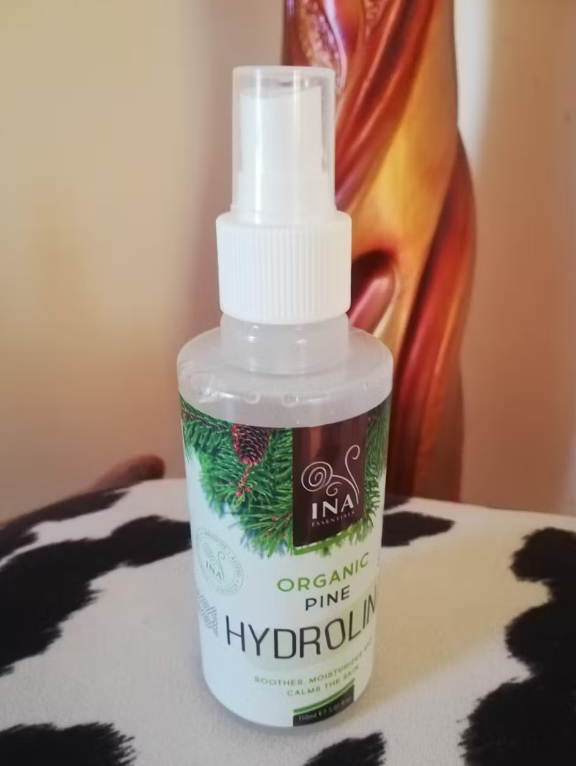
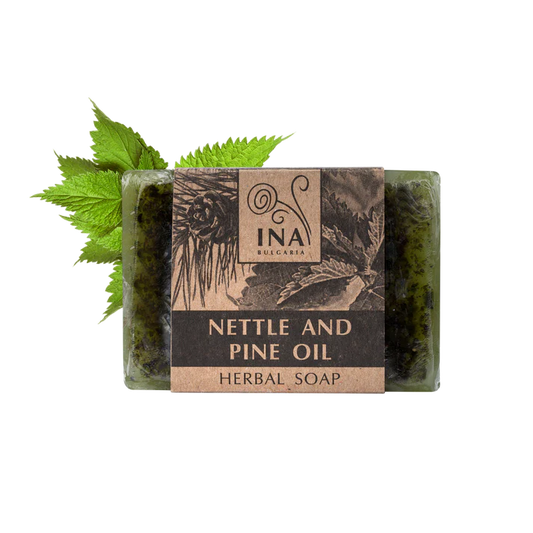
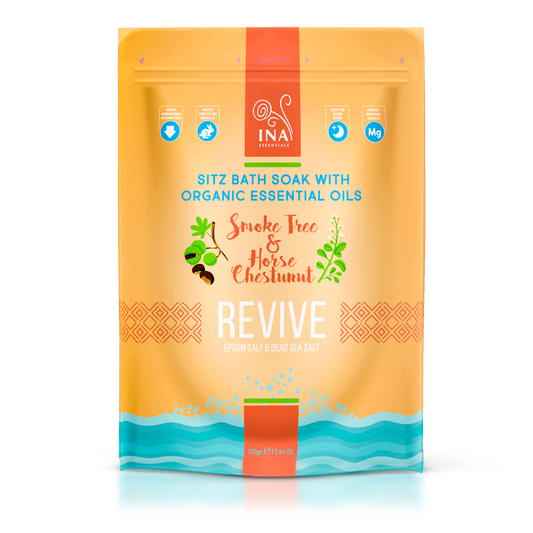
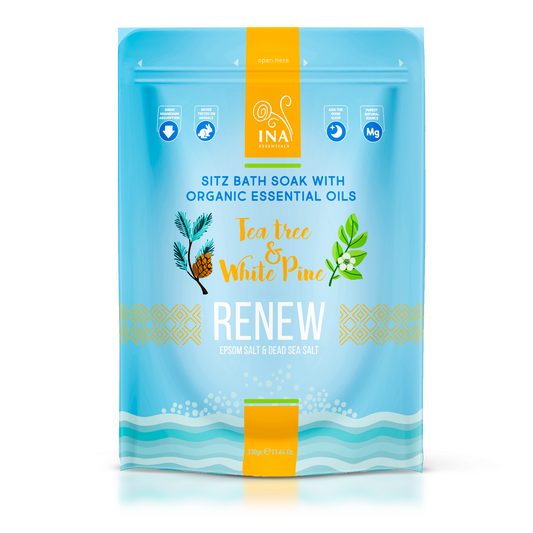
Scots pine is the basis of our whole line for feet and nails: as a spray, in the cream with urea, in the bath salts and in the herbal soap with nettle.

See the whole range
Over 60 products from 11 plants, grown and distilled by us. Creams, shampoos, soaps, salts, essential oils and hydrolats.
See all productsNail careBenefits and precautions: who should take care
With conifers the benefits and precautions come down mainly to the difference between a hydrolat and an essential oil.
If you suspect a fungal infection of the nails or skin, consult a dermatologist. Scots pine cosmetics are care that can run alongside the prescribed treatment, but they do not replace it and do not diagnose.
Frequently asked questions


InaEssentials is a Bulgarian family brand for natural and organic cosmetics. The family has over 25 years of experience in growing essential-oil crops on its own fields, and its products combine centuries-old tradition with the modern and the innovative. A closed production cycle is used - the family controls the whole process, from planting to production and bottling, to ensure the highest quality.
You can find more about the family's journey and the farm on the About us page.
Important information and sources
- European Medicines Agency, Committee on Herbal Medicinal Products, monograph on Pinus sylvestris.
- Regulation (EC) No 1223/2009 of the European Parliament on cosmetic products.
- Regulation (EU) 2018/848 on organic production and labelling of organic products.
- Ingredients and prices are as shown on the InaEssentials product pages as of September 2026.
This article was prepared with the help of artificial intelligence and reviewed by the InaEssentials team.
The information in this article is educational and does not constitute medical advice. InaEssentials products are cosmetics, not medicines, and are not intended to diagnose, treat or prevent any disease. For a skin or any other health complaint, consult a doctor. During pregnancy, breastfeeding and for children, consult a specialist before introducing a new cosmetic product.