

- What nettle is
- How we harvest it and why before seed
- The actives and what they do
- Benefits for the hair with hair loss
- Benefits for hair that gets oily
- Benefits for the skin
- How we turn it into a hydrolat
- Our products with nettle
- Benefits and precautions: who should take care
- Frequently asked questions
What nettle is

Nettle is a perennial herbaceous plant that reaches a metre and a half and is recognised by its opposite, serrated, heart-shaped leaves. It grows in dense patches where the soil is rich in nitrogen: along field margins, fences and old farm buildings.
Its Latin name Urtica dioica hints at a detail few people know: dioica means dioecious. The male and female flowers sit on different plants, which is rare among herbaceous species.
The stinging sensation comes from tiny hairs on the stem and leaves. Each is a hollow, glass-like tip that breaks on contact and injects its contents. Hence the rule everyone knows from childhood: nettle stings while it is fresh and stops stinging once it has been processed.
How we harvest nettle and why before seed

Nettle is not planted. It grows on its own around the farm, and we scythe it by hand from the wild patches. Just as with smoke tree, the question here is not how much we will fertilise, but how much we can take without harming the stand.
The timing of the harvest matters. We scythe it before it sets seed, while the plant is still putting everything into the leaves. After flowering the energy goes into the seeds, the leaves coarsen and the composition changes.
The actives in nettle and what they do

Nettle is one of the few herbs where it is worth talking about minerals, not only essential oil. The key ingredient is silicic acid, a source of silicon, which is linked directly to the strength and elasticity of the hair shaft.
Beside it stand flavonoids such as quercetin and rutin, carotenoids, vitamin C, iron and chlorophyll, to which the plant owes its rich colour. It is this combination of minerals and antioxidants that explains why nettle is present in hair care in almost every European tradition.
The benefits of nettle for the hair with hair loss


The benefits of nettle for the hair are sought most often with thinning and increased shedding. Here it is important to be precise: cosmetics with nettle do not stop hair loss and are not a treatment. What the hydrolat does is keep the scalp in good condition, and a healthy scalp is the precondition without which no other care works.
That is also why the way of use differs from a shampoo. The hydrolat is sprayed directly onto the scalp, parted into sections, and stays there. It is not rinsed off and not applied to the lengths.
The benefits of nettle for hair that gets oily

The second use is for a scalp that gets oily by the second day. Nettle is among the few herbs that handle both complaints at once, because its action is balancing, not drying.
In practice this means you do not need to alternate two different products: one for the roots and one against oiliness. One hydrolat covers both.
The benefits of nettle for the skin
Beyond the scalp, nettle is used for oily skin prone to enlarged pores, and in body care it is combined with Scots pine.
How we turn nettle into a hydrolat

The steam passes through the freshly scythed green mass, carries off the volatile compounds and cools back into a liquid. What remains is the hydrolat: not a diluted extract, not a decoction and not water with fragrance.
Our products with nettle

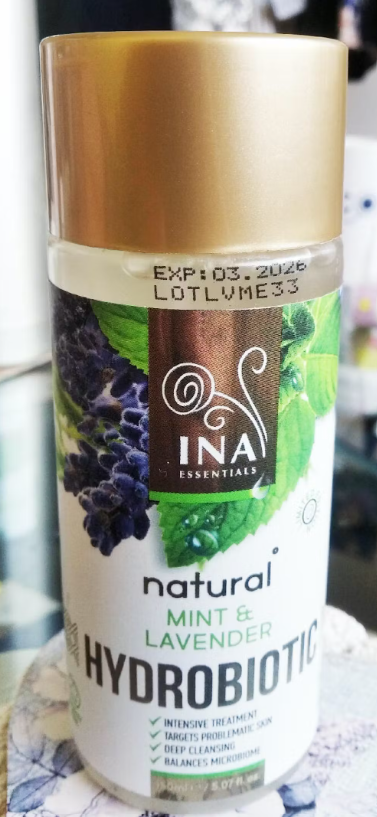
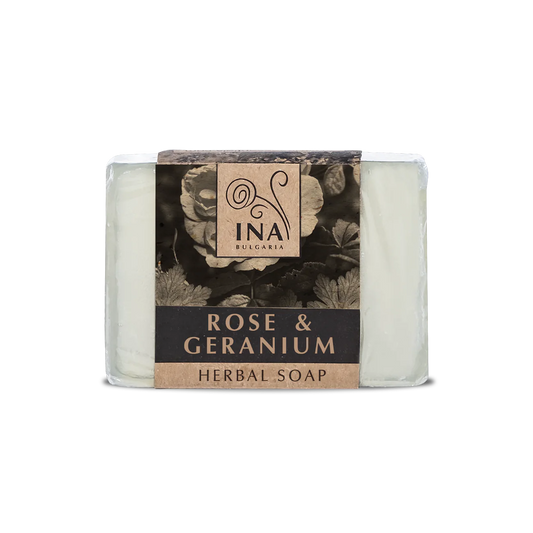
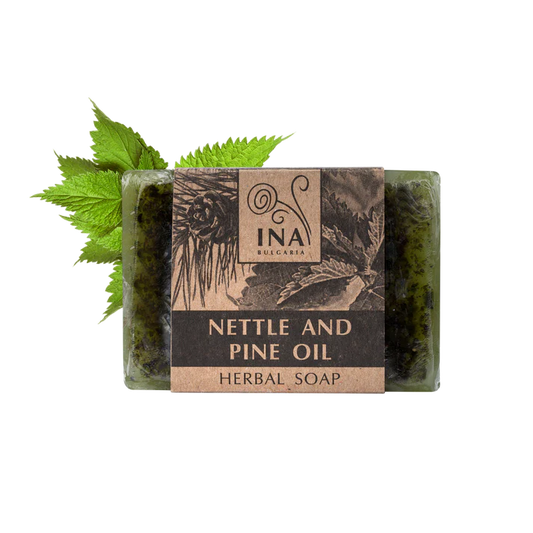
Nettle is present throughout our hair line: as a stand-alone spray, in the shampoo, in the fermented Hydrobiotic together with clary sage and in the herbal soap.

In fermented care the two hydrolats are combined with Hyperferment, a postbiotic complex from nettle, oak bark and liquorice. The fermented component is the added complex, not the hydrolat itself.
See the whole range
Over 60 products from 11 plants, grown and distilled by us. Creams, shampoos, soaps, salts, essential oils and hydrolats.
See all productsHair productsBenefits and precautions: who should take care
Nettle is among the most harmless herbs in the range, but with it too the benefits and precautions come down to a few practical rules.
If hair loss is sudden, heavy or started after an illness, medication or a sharp change in weight, see a dermatologist. Herbal cosmetics are care that can run alongside what has been prescribed, but they do not replace it.
Frequently asked questions


InaEssentials is a Bulgarian family brand for natural and organic cosmetics. The family has over 25 years of experience in growing essential-oil crops on its own fields, and its products combine centuries-old tradition with the modern and the innovative. A closed production cycle is used - the family controls the whole process, from planting to production and bottling, to ensure the highest quality.
You can find more about the family's journey and the farm on the About us page.
Important information and sources
- European Medicines Agency, Committee on Herbal Medicinal Products, monograph on Urtica dioica.
- Regulation (EC) No 1223/2009 of the European Parliament on cosmetic products.
- Regulation (EU) 2018/848 on organic production and labelling of organic products.
- Ingredients and prices are as shown on the InaEssentials product pages as of September 2026.
This article was prepared with the help of artificial intelligence and reviewed by the InaEssentials team.
The information in this article is educational and does not constitute medical advice. InaEssentials products are cosmetics, not medicines, and are not intended to diagnose, treat or prevent any disease. For hair loss, a skin or any other health complaint, consult a doctor. During pregnancy, breastfeeding and for children, consult a specialist before introducing a new cosmetic product.